Creativity That Scales
Company
Alight
Alight is a global benefits technology company serving millions of employees across hundreds of enterprise clients.
The Challenge
A shift to a digital-first strategy created an immediate surge in demand for marketing output. New tools, new expectations, and a growing emphasis on digital channels meant the team was suddenly responsible for producing significantly more work, at a much faster pace.
The initial answer was templating.
It solved for speed, but at a cost. The work became repetitive, creatively flat, and increasingly disconnected from the level of thinking we wanted the team to be known for.
The goal was to scale production without reducing the work to interchangeable parts.
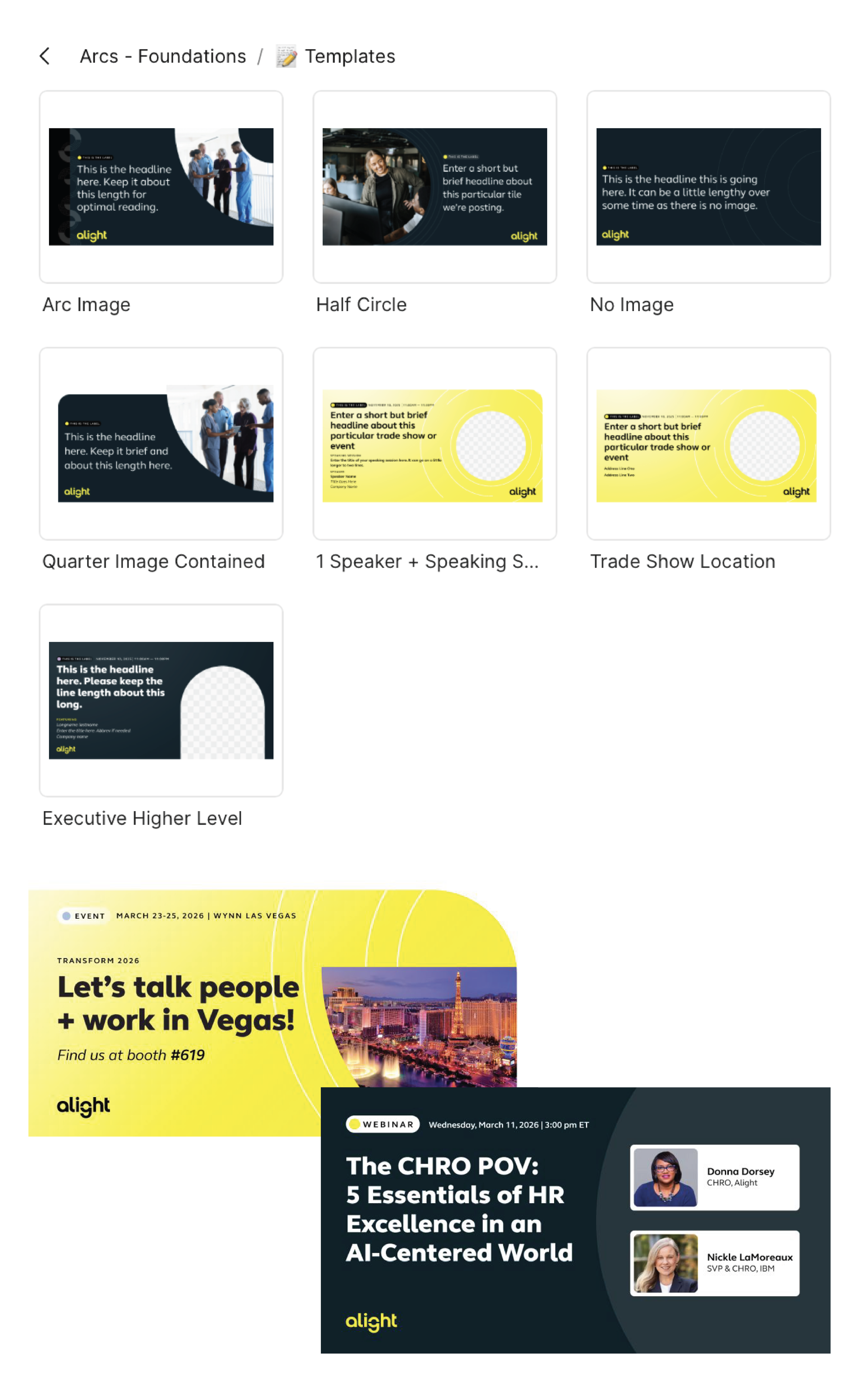
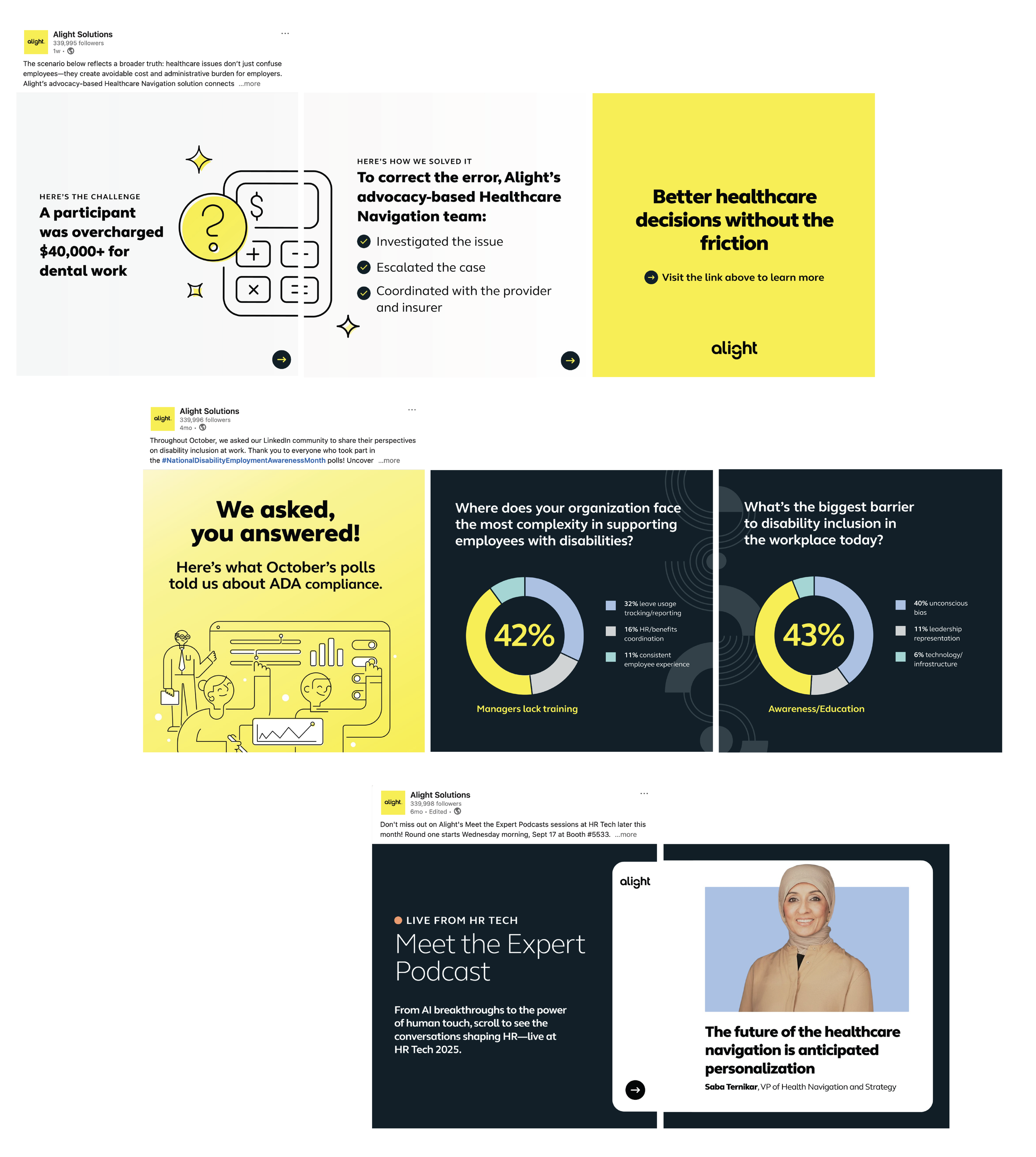
Social Media
Display Ads

.com
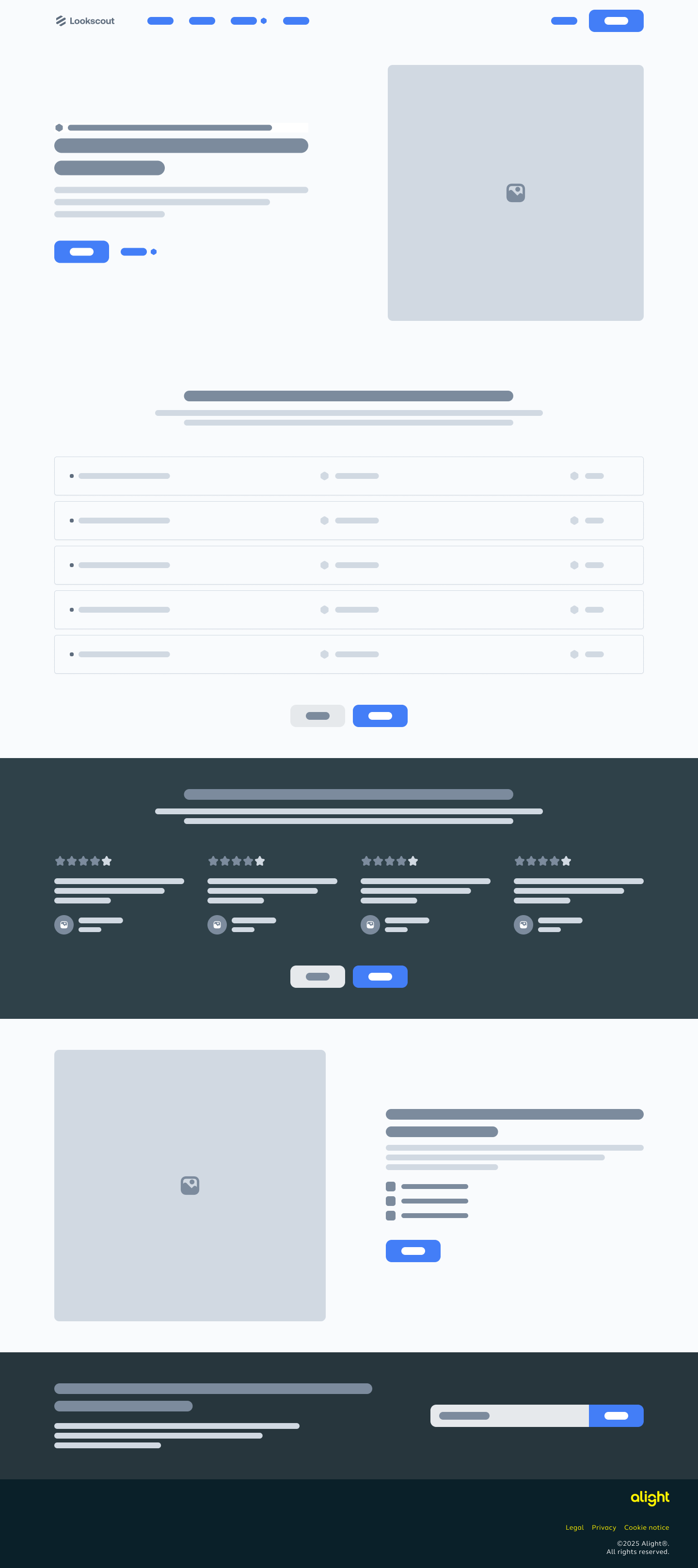
Figma Landing Page Wireframe
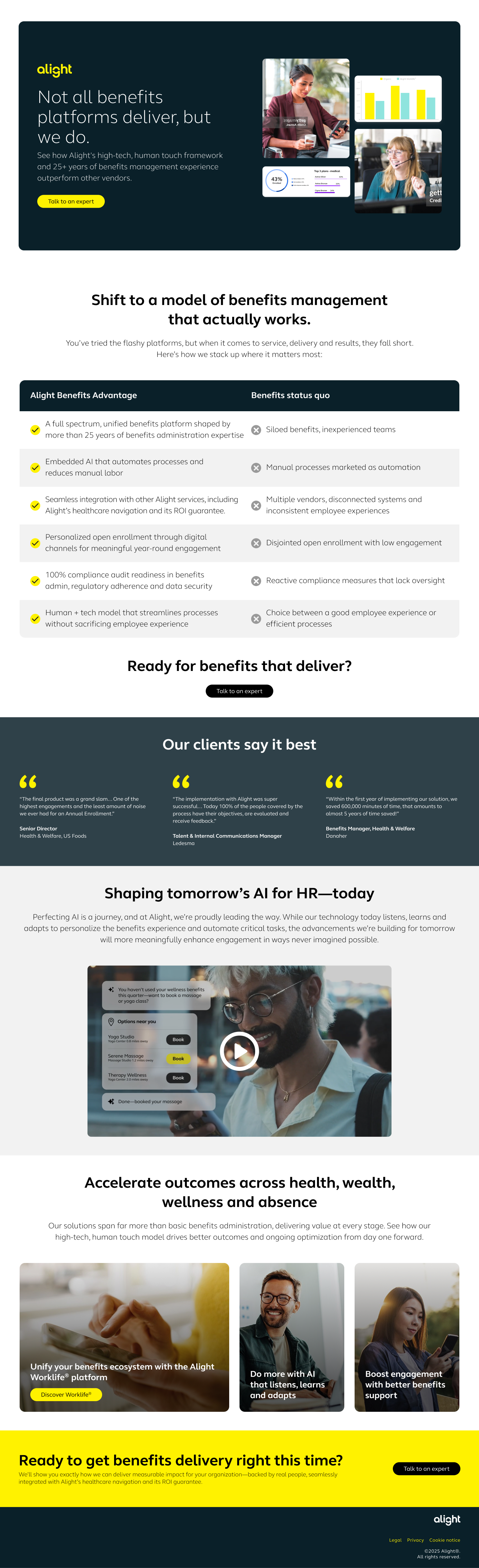
Figma Landing Page Widget Mock Up
-
The solution was a creative system.
Our product design team had already solved a similar challenge for the platform (Alight Worklife®) itself through a robust design system. By studying how their system worked, we began exploring how the same principles could support marketing creative.
-
To bring the idea to life, I partnered closely with two members of my team: our UX/UI Director and our Digital Design Lead.
None of us had built a marketing design system before, but we knew the problem well. As digital demand increased across display, social, email, and web, our team was spending more and more time recreating the same structures instead of focusing on the ideas behind them.
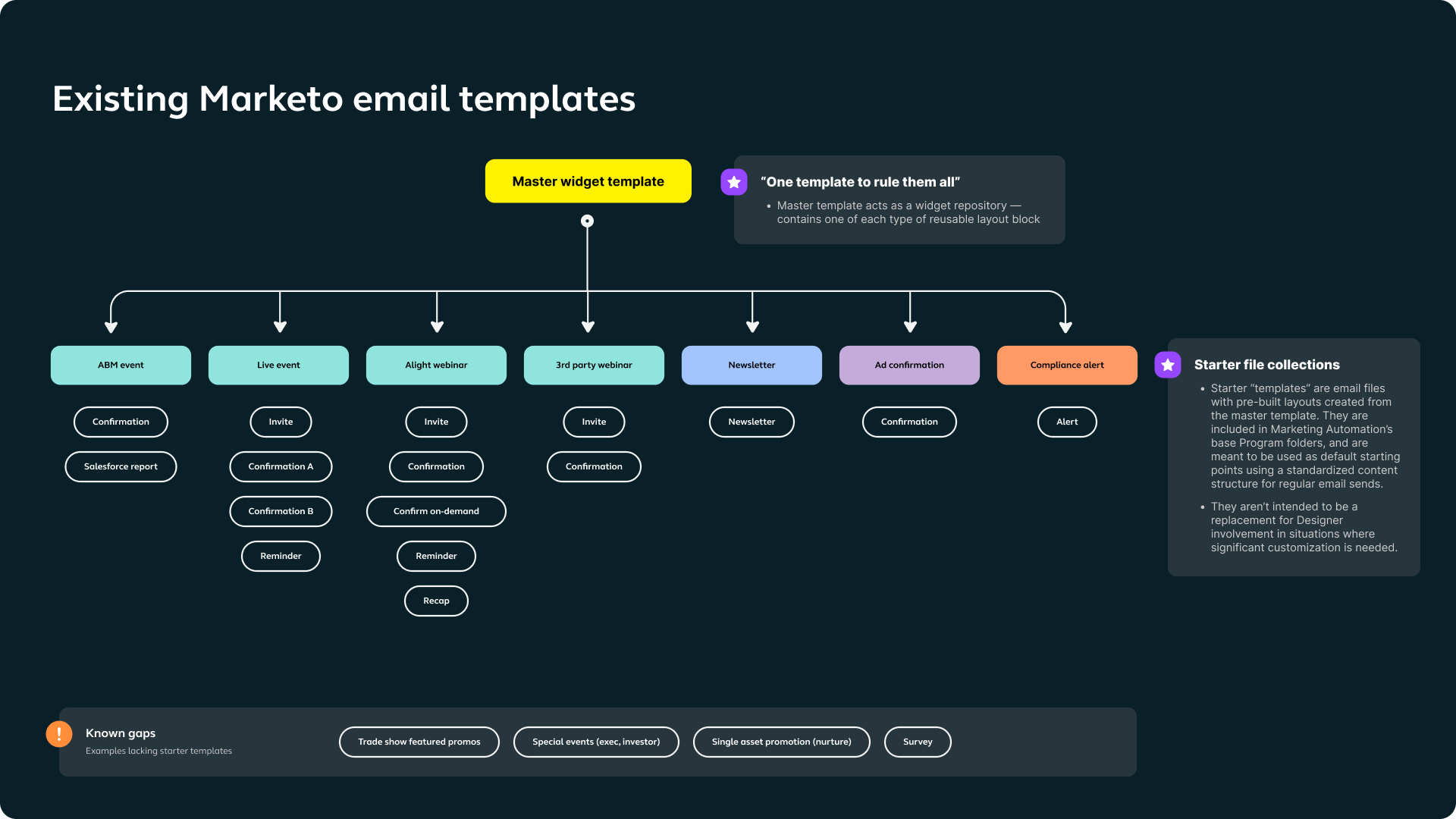
Working together, we mapped how our brand elements could become reusable components designers could assemble quickly across campaigns.
As the system took shape and its value became clear, the Digital Design Lead who had been driving much of the work naturally stepped into a Design Systems Lead role, formalizing the focus in this new direction.
-
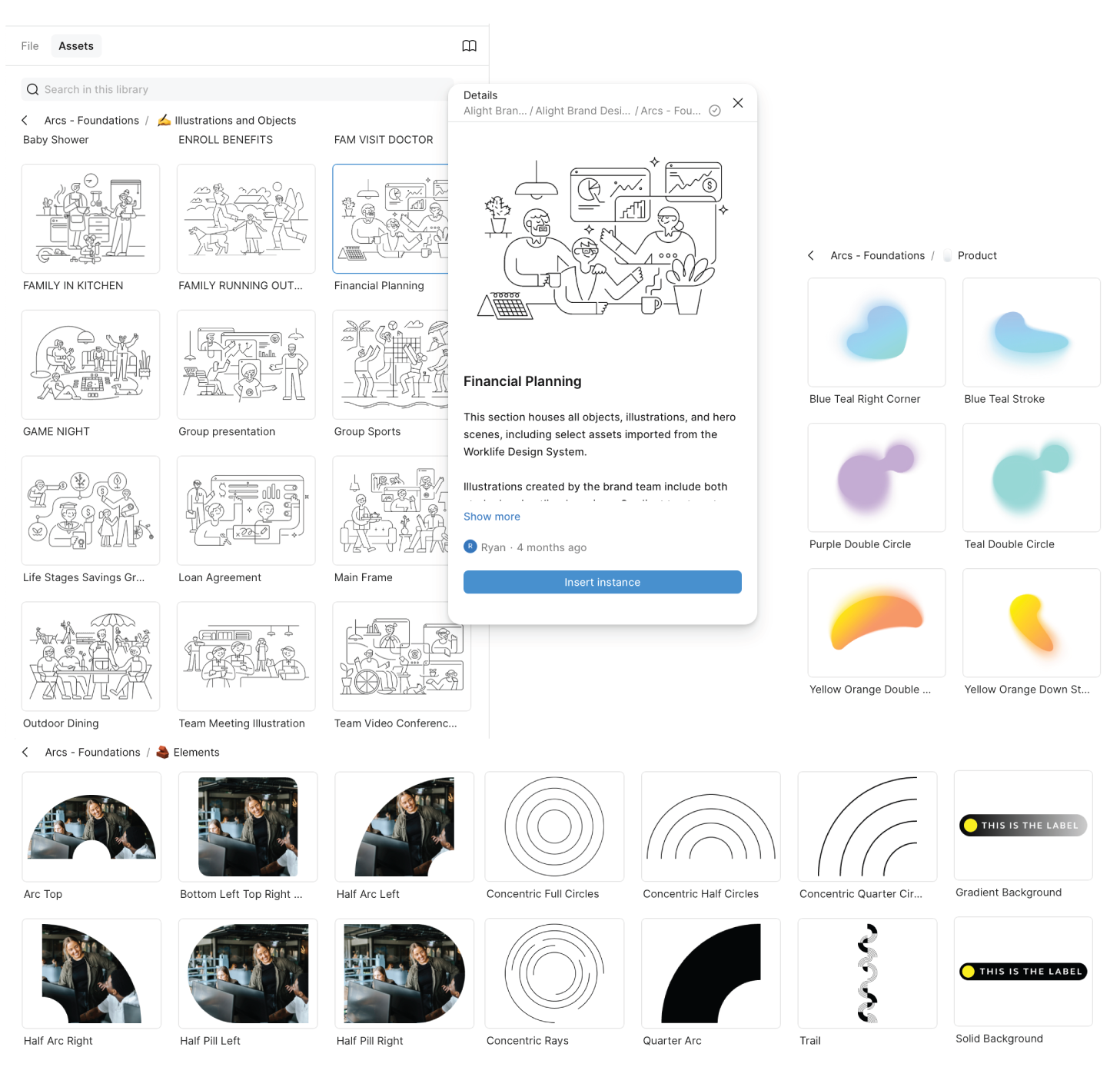
The newly recognized Design Systems Lead built a modular system in Figma that translated our brand into reusable components designers could use across campaigns:
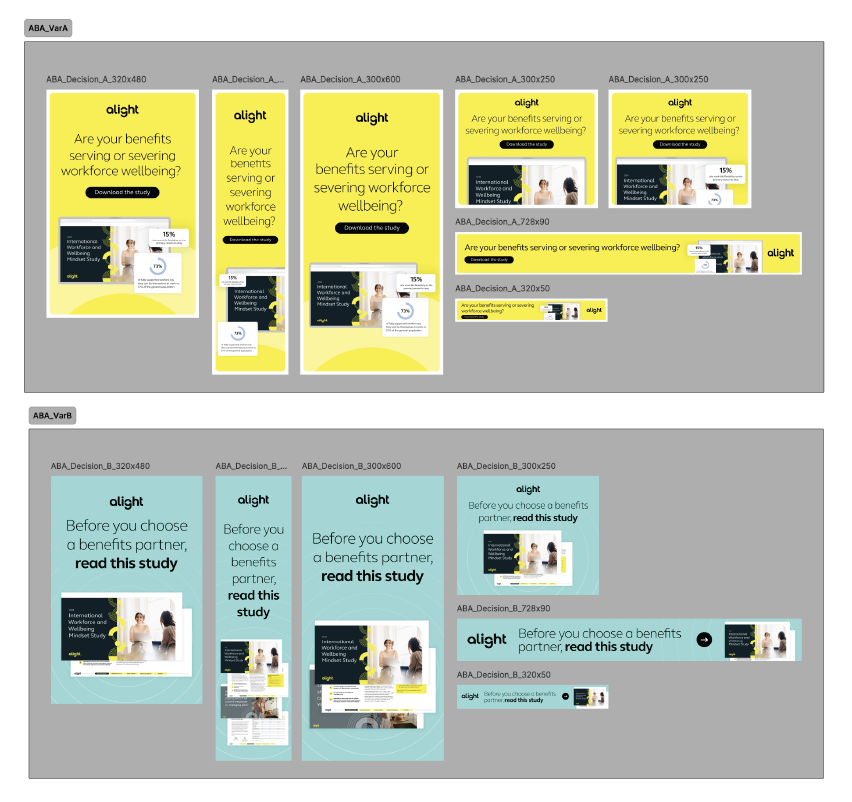
flexible layout frameworks for display, social, email, and landing pages
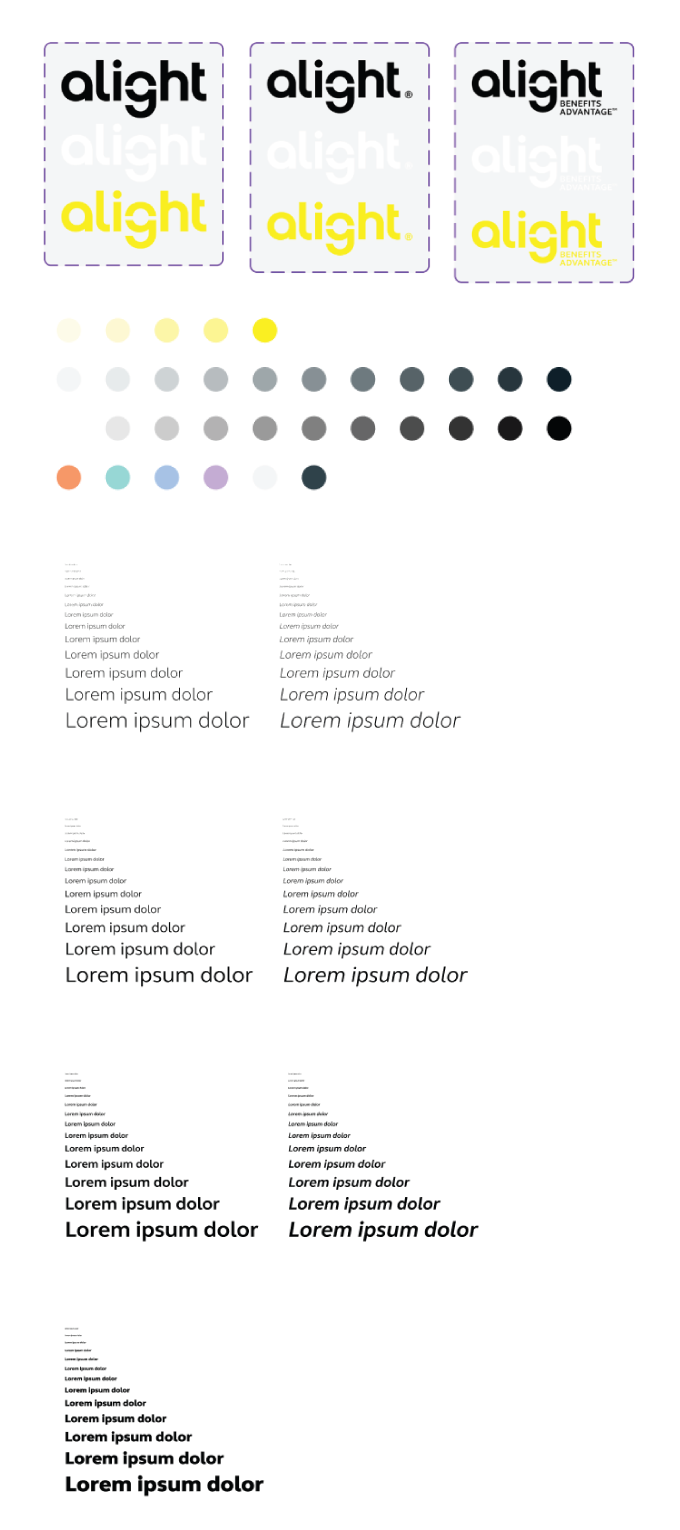
headline and type treatments aligned with our brand typography
image containers that handled cropping and scaling automatically
shared libraries for icons and brand graphics
color and pattern styles applied consistently across formats
For display campaigns, a single campaign board could show all eight required ad sizes at once, with content flowing across each variation. Designers could then refine layouts instead of rebuilding every asset from scratch.
The same system also supported social campaigns, email templates, and landing page concepts, allowing teams to prototype and approve work in Figma before development.
-
Recognizing the Opportunity
As demand for digital marketing continued to grow across display, social, email, and web, I recognized our team needed a better way to produce creative at scale and began exploring how a system-based approach might help.Developing the Idea Together
I partnered closely with our UX/UI Director and one of our Digital Design Leads to figure out what a marketing design system could look like. None of us had built one before, so much of the process involved learning, experimenting, and shaping the system as we went.Learning from Product Design
We spent time studying how our product design team had built their platform design system and used many of the same principles to think through how marketing creative could work more modularly.Creative Direction
Throughout the process, I provided creative guidance and reviews to ensure the system stayed aligned with our brand while remaining flexible enough to support a wide range of campaign needs.Supporting Team Growth
As the work evolved and the system proved valuable, the Digital Design Lead driving much of the effort stepped into a formal Design Systems Lead role, expanding this capability within the team.
What This
Work Changed
Turn times decreased by 40–50%, significantly increasing the team’s ability to respond to demand without adding headcount.
More importantly, the work improved.
The impact extended beyond production efficiency. Stakeholders gained a clearer way to collaborate, using modular components to quickly visualize ideas, explore variations, and align earlier in the process.